


Understanding Anxiety and Stress in Our Fast-Paced World
Anxiety and stress are the result of the fast-paced life we have created. The World Health Organisation estimates that around 4.41% of the global population currently suffers from an anxiety disorder, with hundreds of millions of people affected each year. The pace of life, work pressure and sustained uncertainty chronically activate the body's alarm systems, increasing the risk of insomnia, depression and physical problems if we do not learn to regulate it.
Happiness Can Be Trained
The good news is that research in positive psychology shows that happiness is not a gift, but a set of skills that can be trained, just like a muscle. Research on positive psychology interventions shows that practices such as gratitude, mindfulness, and working with personal strengths significantly reduce symptoms of anxiety and stress, while increasing well-being and life satisfaction.
How to Generate Positive Emotions?
Positive emotions, such as joy or gratitude, act as a buffer: they expand mental resources, improve coping skills and promote faster recovery after adversity. Optimism and meaningful relationships, two central pillars of positive psychology, are associated with a lower risk of depression and greater resilience in the face of everyday challenges. Learning to be happy involves much more than “thinking positively”: it requires training your emotions, body, mind and relationships in an integrated way.
A Course in Happiness
Models such as PERMA, proposed by Martin Seligman, show that solid happiness is built by cultivating positive emotions, deep engagement in meaningful activities, good relationships, meaning, and realistic achievements. There are already happiness courses that combine positive psychology, emotional intelligence, mindfulness, conscious movement, and creativity to offer practical tools that can be applied from the first week to sleep better, communicate more healthily, and rediscover the joy of living.
In this type of group process, emotional management, resilience, presence, realistic optimism and the ability to enjoy the body and small everyday pleasures are worked on over several weeks or months. Evidence indicates that when these skills are trained continuously, people experience less anxiety, less perceived stress and a stable increase in subjective well-being.
That is why, a course in happiness Well-designed living is not a luxury: it is a science-based investment in a calmer, happier and more meaningful everyday life.
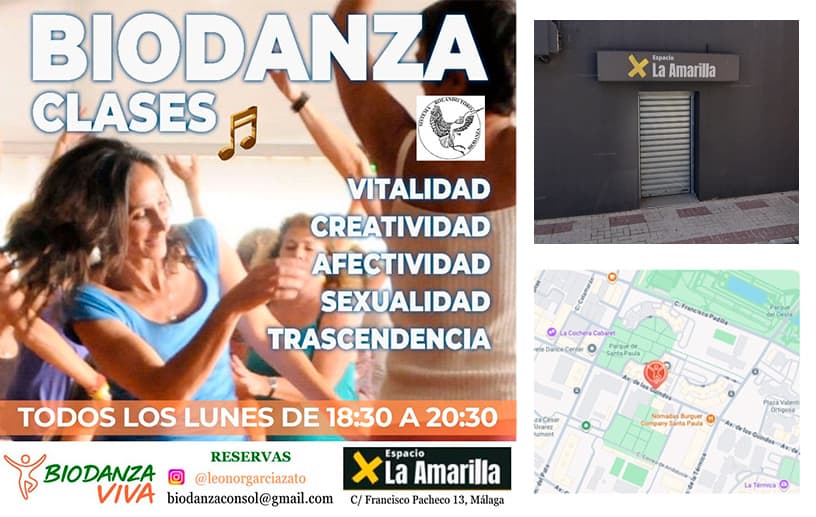
Live the experience of Biodanza in Malaga: connect with your joy, release your authenticity and transform your energy in a unique space. Book your place and start today.
y en C. Venus 22, Arroyo de la Miel, Benalmádena
