


How biodanza connects us with our emotions
We spend a lot of time in our heads. We think, plan and analyse, and, almost without realising it, we leave our bodies out of the conversation. Yet that is where emotions are truly felt. Biodanza is based on this simple yet powerful idea: if you want to know how you’re feeling and who you are, listen to your body.
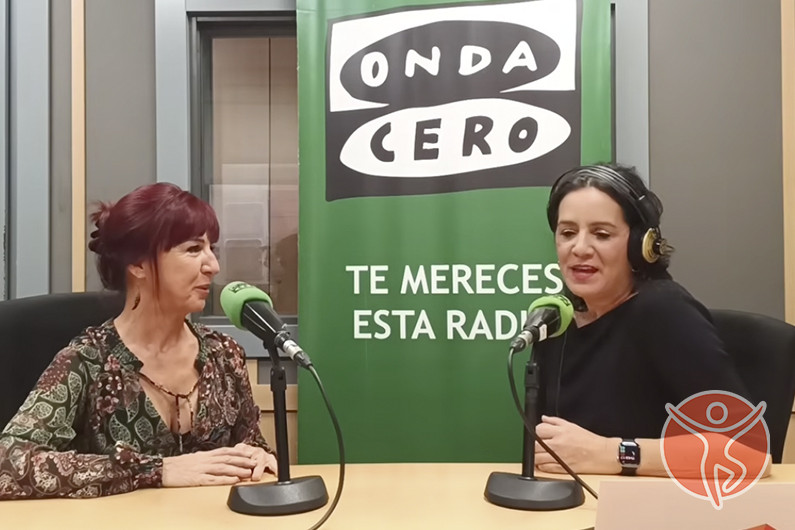
In an interview on Onda Cero’s wellbeing programme, Leonor García Zato – a journalist, biodanza facilitator, and trainer in Gestalt therapy and ontological coaching – explained what this discipline involves and why it captivates anyone who tries it.
What is Biodanza?
Biodanza is a system of human development created by the anthropologist Rolando Toro. It is based on a theoretical model with a clear foundation: we are all born with a range of genetic potentials, but whether or not those potentials are realised depends on our life experiences.
To stimulate them, Biodanza focuses on five areas of experience:
- Vitality
- Creativity
- Affectivity
- Sexuality
- Significance
Through hundreds of exercises, each session explores these areas and creates space for that potential to come to the fore.
Ecofactors: a safe space to grow
From a young age, we are constantly influenced by our surroundings: family, school, friends and the environment. These are known as ‘eco-factors’, and they do not always work in our favour.
In a biodanza class, an environment with positive eco-factors is deliberately created. There is care, there is connection and there is a safe space. It is this atmosphere that allows each person to let go and flourish without fear of being judged.
Music, emotion and movement
This is the heart of the method. Music plays, that music stirs an emotion, and, at that moment, you set your body in motion to express it.
Not just any song will do. Music is one of the seven powers of biodanza, and there is a team of musicologists who specialise in selecting pieces capable of guiding the participant into the state that each exercise aims to achieve.
Nor are there any choreographed routines or steps to learn by heart. It’s all about expressive, authentic movement – what is known in Biodanza as a movement full of meaning. It’s not about dancing well, but about dancing the way you feel.
The first impression: feeling that you belong
The first thing anyone arriving for a session notices is the close bond within the group. Even if that group has been working together for months, after just one class you already feel part of it.
The reason lies in the dynamics themselves: there is eye contact, physical contact, synergistic dances and dances in feedback, where you’re truly with the other person.
This has a direct effect on our mood. We often feel that we don’t fit in: «I’m not good enough here», «there’s something missing here», «other people are better». In Biodanza, it’s exactly the opposite: there’s a sense of belonging, of there being a place for you right from the start.
The body cannot be bribed
The second great gift of biodanza is self-knowledge. Leonor sums it up in a single sentence: «The body cannot be bribed».
In our minds, we tell ourselves stories about who we are: what we’ve studied, the places we’ve travelled to, the things we like. But that image doesn’t always match who we really are. The body, on the other hand, cannot lie.
As you move, you explore aspects of yourself that remain hidden in everyday life: how you connect with others, how you set boundaries, how well you can express yourself, and how you experience your most intimate self. And you realise just how much there is still to discover about yourself.
Beyond emotion: the body learns too
Leonor brings this perspective to the worlds of business and education through her programme of Experiential Emotional Intelligence, which stems from combining cognitive and affective intelligence. Its starting point is clear: in many training programmes, the body is missing – and that is where your whole truth lies.
That’s why her sessions begin with a brief theoretical introduction so that participants know what to expect and can relax. Then, off with the high heels and ties: the body comes into play to work on team cohesion, leadership or whatever issues have been identified in collaboration with human resources. The result is that learning isn’t confined to a presentation; it becomes part of the experience.
The same applies to classrooms. Sitting still for six hours does not promote learning. When we move around, look around and interact with others, we activate neural networks that help us learn better.
A method practised all over the world
Although it is not as popular as salsa or merengue, biodanza is very widespread: there are more than 200 schools worldwide. In Málaga alone there are around ten weekly groups, and it is also practised in Seville, Cádiz and Córdoba.
And there’s one thing that keeps coming up: anyone who tries it comes back. It’s hard to put into words because it’s very much a feeling, but when you experience it, it really gets to you.
A tribe of all ages
Leonor’s groups bring together a wide variety of people: a faculty vice-dean, a biologist, a woman who works in a supermarket, and men and women of all ages. Even Laura, who turned 18 whilst she was part of the group.
That mix of ages and life experiences is, in itself, part of the learning process. It is the human tribe as it is, and it teaches us to relate to one another in a different way.
Fancy giving it a go?
The best way to understand biodanza is to experience it for yourself. If you’re in Málaga, there are classes on Mondays and Tuesdays in Arroyo de la Miel, and you’re welcome to come along and try a session. As Leonor says: what have you got to lose by dedicating two hours to your life?
All the information about classes and events can be found at biodanzaviva.es, and you can also follow Leonor García Zato on Instagram and Facebook.